
Stroke Prevention Know Your Numbers:
How Blood Pressure Control Can Help Reduce Your Stroke Risk
High blood pressure often has no symptoms. Knowing your numbers — and knowing what to do when they’re high — can be an important part of protecting your brain and reducing your risk of stroke.
Know Your Numbers:
How Blood Pressure Control Can Help Reduce Your Stroke Risk
High blood pressure often has no symptoms. Knowing your numbers — and knowing what to do when they’re high — can be an important part of protecting your brain and reducing your risk of stroke.
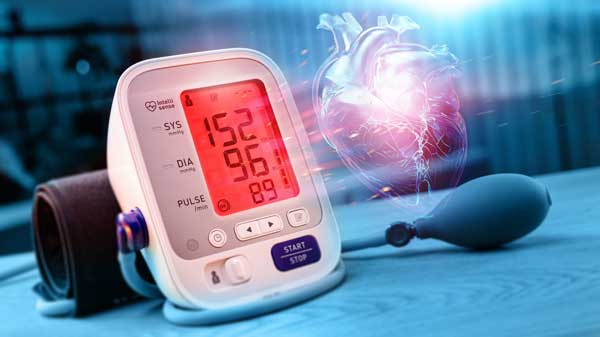
High blood pressure is one of the most important risk factors for stroke — and one of the most treatable.
The challenge is that high blood pressure often causes no symptoms. You can feel perfectly well while elevated pressure is putting added stress on blood vessels throughout the body, including those that supply the brain.
That makes knowing your numbers an important part of stroke prevention. According to the American Heart Association, about 125.9 million U.S. adults — 47.3% — have high blood pressure. Current blood pressure guidelines emphasize earlier recognition, accurate home monitoring and treatment when appropriate.
Know Your Blood Pressure Numbers
Blood pressure is written as two numbers. The top number, or systolic pressure, measures the pressure in your arteries when your heart beats. The bottom number, or diastolic pressure, measures the pressure between beats.
How High Blood Pressure Raises Stroke Risk
Over time, uncontrolled high blood pressure can damage and weaken blood vessels. In the brain, that can contribute to both major types of stroke.
An ischemic stroke occurs when blood flow to part of the brain is blocked, usually by a clot. A hemorrhagic stroke occurs when a blood vessel ruptures and causes bleeding in or around the brain.
Controlling blood pressure is therefore not simply about improving a number on a monitor. It is an important part of reducing long-term cardiovascular and stroke risk.
How to Check Your Blood Pressure at Home
Home monitoring can give you and your medical team a more useful picture than a single reading taken occasionally in a doctor's office. But technique matters — an inaccurate measurement can give you an inaccurate picture of your blood pressure.
Looking at the pattern over time is more useful than focusing on one isolated number. A record of home readings can help your health care professional determine whether your blood pressure is consistently elevated and whether treatment is working.
What If Your Blood Pressure Reading Is High?
One higher-than-normal reading usually is not an emergency. Sit quietly, repeat the measurement and record the results.
If your blood pressure is higher than 180/120 mm Hg, wait at least one minute and check it again.
If it remains that high and you have chest pain, shortness of breath, numbness, weakness, vision changes or difficulty speaking, call 911 immediately. Do not wait to see whether your blood pressure comes down on its own.
If your blood pressure remains above 180/120 mm Hg but you do not have new concerning symptoms, contact your health care professional promptly for guidance.
Monitoring Is Only the First Step
Checking your blood pressure doesn't lower it — but finding high blood pressure gives you and your medical team the opportunity to address it.
Depending on your blood pressure and overall cardiovascular risk, treatment may include changes in diet and sodium intake, physical activity, weight management, alcohol consumption and other lifestyle factors, as well as medication when appropriate.
The 2025 ACC/AHA high blood pressure guideline generally recommends a treatment goal of less than 130/80 mm Hg for adults, while recognizing that treatment should be individualized.
Know the Signs of Stroke
Blood pressure control can help reduce your risk, but everyone should also recognize the warning signs of a stroke.
Sudden weakness or numbness on one side of the body, facial drooping, difficulty speaking or understanding speech, sudden vision problems, loss of balance or coordination, or a sudden severe headache can be signs of a stroke.
For certain patients with an ischemic stroke caused by a blocked large brain artery, endovascular thrombectomy can remove the clot through a minimally invasive catheter-based procedure and restore blood flow to the brain.
Make Blood Pressure Part of Your Stroke-Prevention Routine
You do not need to wait until you feel unwell to learn your blood pressure. In fact, because hypertension often has no obvious symptoms, checking it before problems develop is exactly the point.
Know your numbers. Keep an accurate record if your physician recommends home monitoring. And if your readings are repeatedly elevated, talk with your primary care physician about what they mean for you.
A few minutes spent checking your blood pressure can provide information that helps you and your medical team address one of the most important modifiable risk factors for stroke.
